Pressure Washing & Soft Washing
What's the Safest Way to Remove Algae from Siding?
If your Charlotte home has green streaks, dark patches, or a dingy film on the siding, you're looking at algae, mildew, or mold. Here's how to clean it without damaging your exterior - and which method actually lasts.
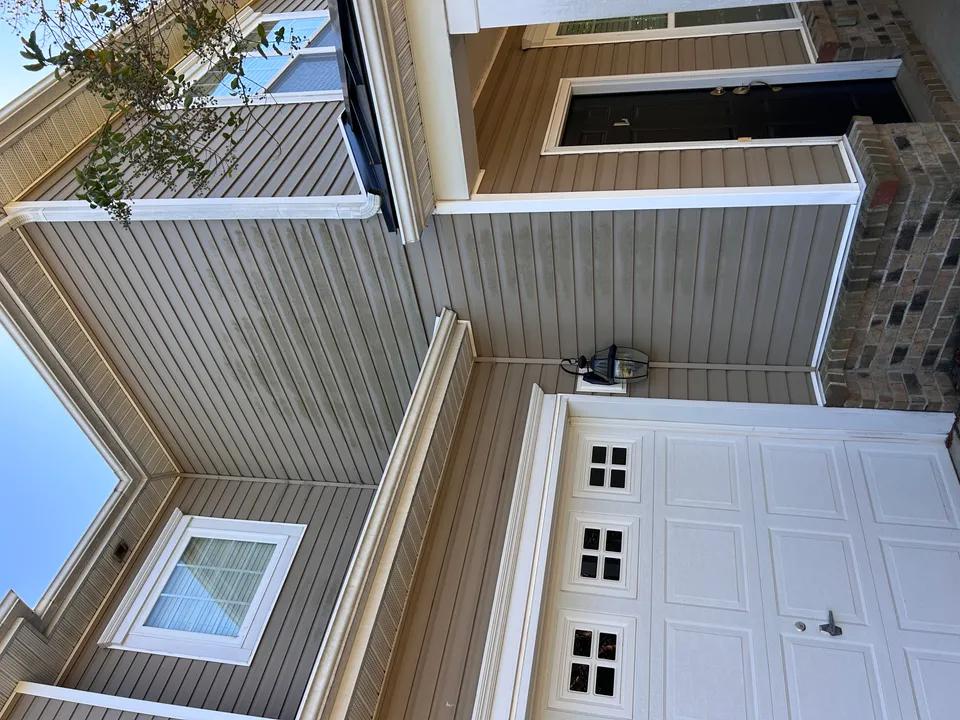
Why does algae grow on Charlotte siding?
Charlotte sits squarely in USDA hardiness zone 7b/8a - warm summers, mild winters, and humidity levels that regularly exceed 80%. These conditions are paradise for Gloeocapsa magma (the green algae you see on siding) and other biofilm organisms like mildew and black mold.
North-facing walls get the least sunlight and stay damp longest. Areas near tree canopy, garden beds, or gutters with poor drainage are worse. Over time, algae colonies darken and spread - that "green glow" is actually a living organism feeding on moisture and microscopic debris trapped in the siding texture.
The two main cleaning options: soft wash vs. pressure wash
When homeowners search for "algae removal from siding," most land on two approaches: go rent a pressure washer, or hire someone who knows how to soft wash. They sound similar but produce very different results.
❌ Pressure washing (high pressure)
- • 2,500–4,000 PSI aimed at siding
- • Can force water behind vinyl panels, creating hidden mold
- • Chips paint on HardiPlank and trim boards
- • Removes surface growth but doesn't kill the root
- • Algae returns in 3–6 months
✅ Soft washing (low pressure + detergent)
- • Under 500 PSI - lower than a garden hose
- • Cleaning solution does the work, not water force
- • Zero risk of water intrusion or paint damage
- • Kills algae, mold, and mildew at the cellular level
- • Clean lasts 12–18 months
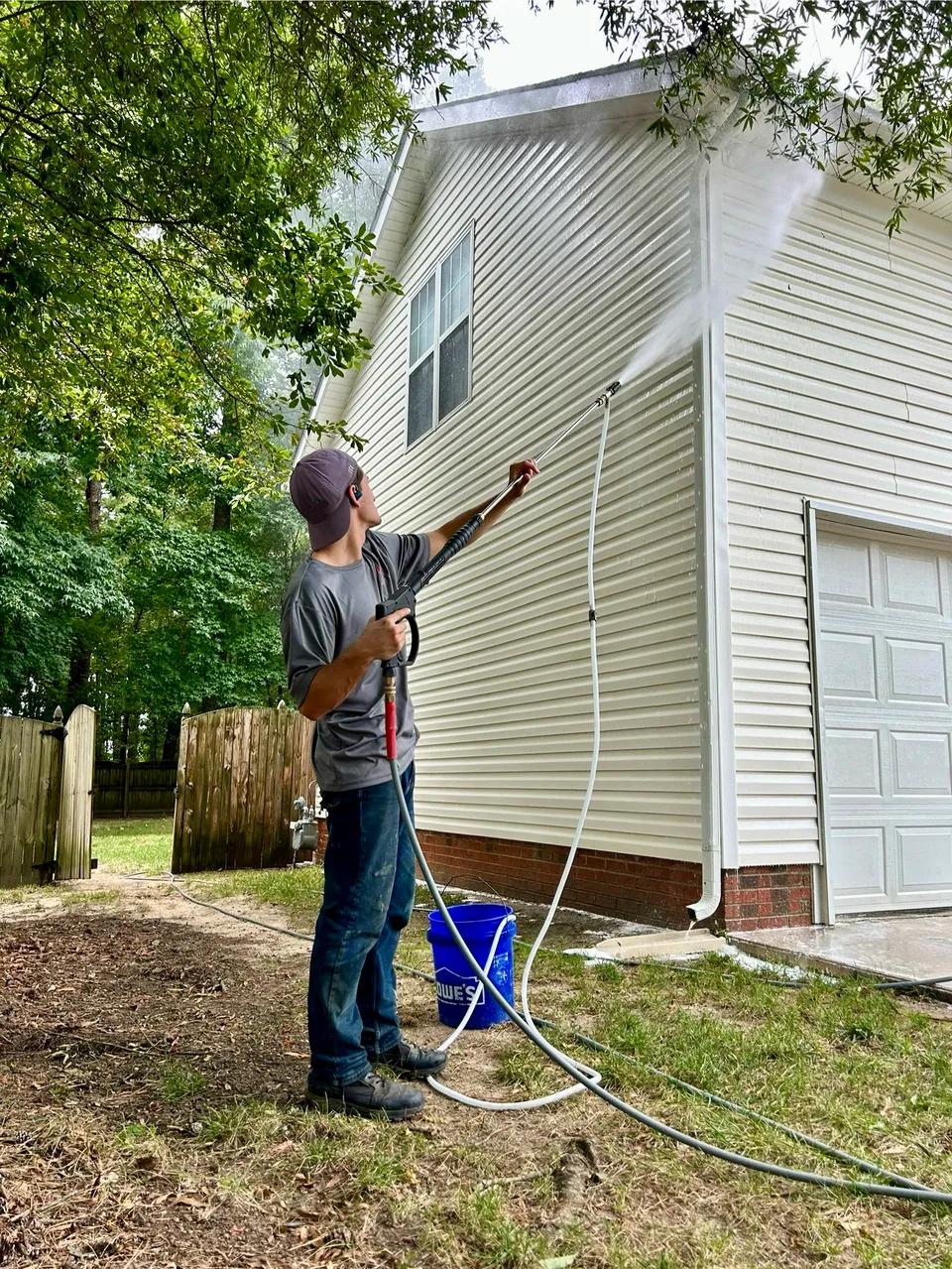
How soft washing works, step by step
Soft washing isn't just "turning the pressure down." It's a completely different method:
- Pre-soak landscaping - We wet plants and grass around the house to dilute any solution runoff.
- Apply house wash solution (bottom-up) - A biodegradable mix is applied from the bottom up to prevent streaking. It clings to the surface and starts breaking down algae and mold.
- Dwell time (5–10 minutes) - The solution needs time to penetrate biofilm and kill organisms at the root. This is the step DIYers skip, which is why their results don't last.
- Gentle rinse (top-down) - We rinse from the top at garden-hose pressure, following the natural flow of rainwater.
- Post-rinse plants - A final soak of all landscaping to ensure no cleaning solution lingers.
Can I DIY this with a store-bought cleaner?
You can try, but there are a few reasons the DIY route often disappoints:
- Store-bought "siding cleaners" are heavily diluted. They may lighten algae but rarely kill it at the root.
- Renting a pressure washer gives you power but not the technique to avoid water intrusion.
- Reaching second-story walls safely requires specialized equipment and fall-protection knowledge.
- Improper detergent choice can harm plants, stain brick, or discolor certain siding materials.
For a single, ground-level patch of light algae, a vinegar-water mix and a soft brush might work. For a full exterior - especially a two-story Charlotte home surrounded by trees - a professional soft wash is the safer, more effective, and ultimately more economical choice.
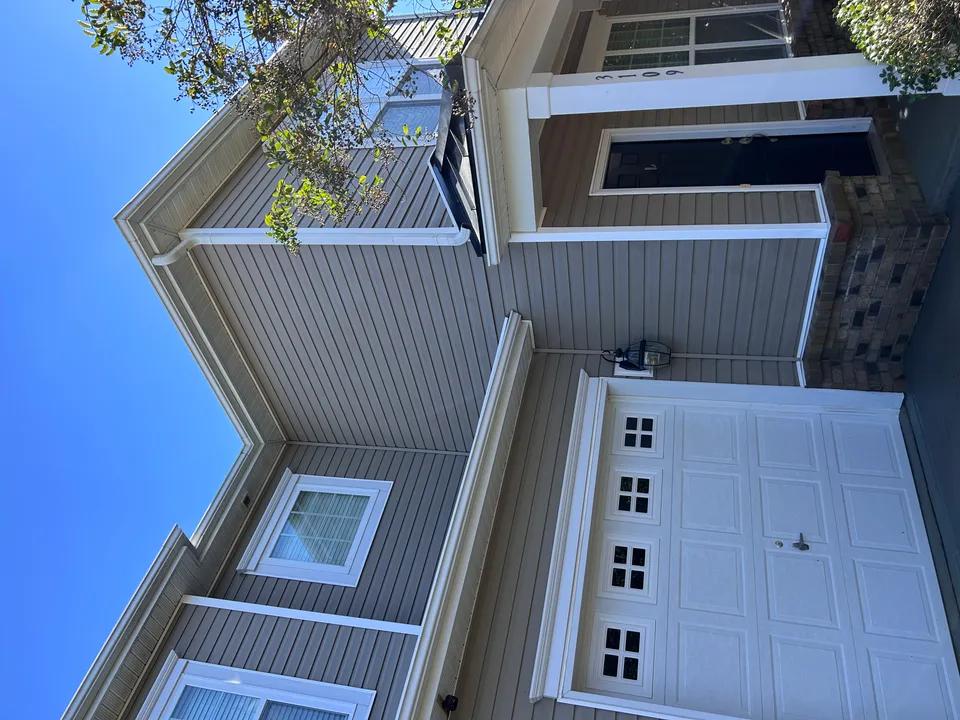
How to prevent algae from coming back
- Trim overhanging branches - More sunlight and airflow on the siding slow regrowth.
- Fix gutter drainage - Make sure downspouts aren't splashing against the house.
- Schedule an annual soft wash - One cleaning per year keeps growth from getting a foothold.
- Redirect sprinklers - Constant moisture on siding accelerates algae growth.
Want algae gone for good?
We soft wash homes all over the Charlotte area - Ballantyne, Huntersville, Fort Mill, Matthews, and beyond.
Frequently asked questions
Is it safe to pressure wash vinyl siding?
High-pressure washing can force water behind vinyl siding, causing mold inside your walls. Soft washing uses low pressure and a cleaning solution instead - it's safer and more effective for siding.
What causes green algae on house siding?
Green algae (Gloeocapsa magma) thrives in humid, shaded environments. Charlotte's warm, moist climate is ideal for it, especially on north-facing walls and areas with poor airflow.
How long does a soft wash last?
A professional soft wash typically keeps siding clean for 12–18 months, because the detergent kills algae and mold at the root. Pressure washing alone only removes surface growth and may last just 3–6 months.